How to trade meme coins like a pro scalper without blowing up your account
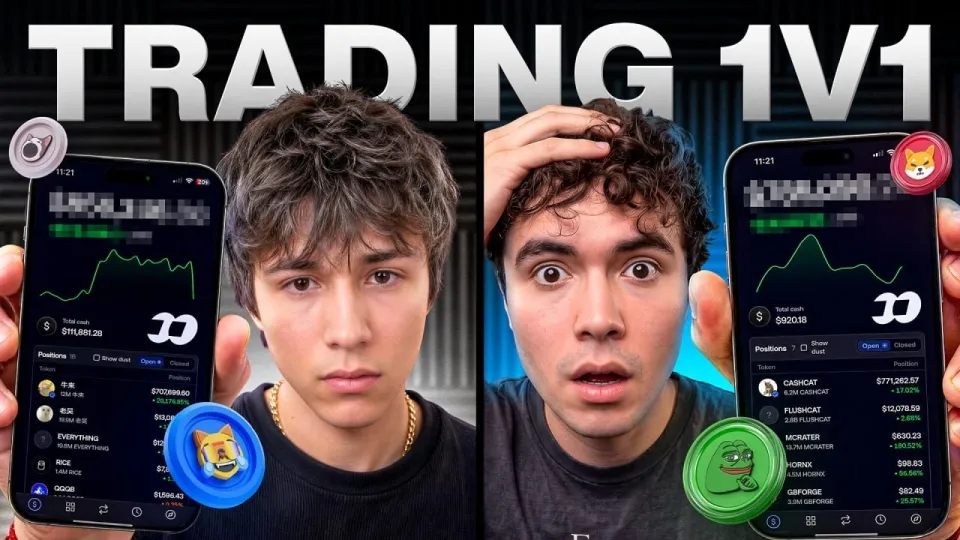
Video: I Challenged A Pro Memecoin Trader (Who Won?)
Want articles like this for your own video to promote it on YouTube and Google? Order them through the Telegram bot @sat_sit_bot. Articles with your video embedded are written and posted by the bot itself — on popular topical sites (no ads). Try it free: 50 articles on us.
· based on the channel insentos
Meme coin trading is short-horizon speculation on tokens with no cash flows, where the edge comes from speed, position sizing and reading crowd behaviour rather than from fundamentals. You trade a meme coin by picking a liquid venue such as Axiom, entering small, defining an exit before you buy, and treating every position as money you can afford to lose entirely. A registration link to the community side of that workflow is available at FOMO.
The format of the insentos challenge video, where an experienced guest trades live against the host for roughly half an hour, is a useful mirror: it shows how much of the outcome is process and how much is luck. The commentary under such videos is telling too, with viewers repeatedly noting that these sessions often end in a loss and that trading from an influential account is a different game entirely.
What a meme coin actually is and why the odds are stacked
A meme coin is a token whose value rests almost entirely on attention, narrative and liquidity, not on revenue or product. That makes its price a function of who is buying right now and how thin the order book is, which is why a token can double in minutes and round-trip to zero the same day.
The structural problems are worth stating plainly:
- Supply concentration. A handful of wallets often hold enough of a new launch to move the price at will, and those wallets are frequently connected to the deployer.
- Liquidity fragility. Thin pools mean your own sell order can be the event that crashes the chart.
- Attention decay. Memes have a half-life; the crowd that made the token move moves on to the next ticker.
- Execution friction. Slippage, priority fees and failed transactions on Solana eat into small edges.
None of that makes meme coins untradeable, but it does mean the skill being tested is risk management under uncertainty, not research into a business.
How to trade meme coins step by step
A repeatable process beats intuition, especially when a chart is moving fast. The sequence below is the practical version of what disciplined scalpers do in a live session.
- Set a session bankroll. Decide the total amount you are willing to lose before you open the terminal, and keep it separate from savings. If losing it would change your month, the size is wrong.
- Cap single positions. Many experienced scalpers risk a small fixed percentage per trade, often 1–3% of the session bankroll, so a string of losses does not end the session.
- Pick the venue before the token. Execution quality matters more than the ticker. Axiom (https://axiom.trade/) is the trading interface referenced in the video description; it aggregates Solana flow and gives fast chart and order entry.
- Check the contract first. Look at holder distribution, deployer history, liquidity locked or burned, and whether trading is enabled. Skip anything with a suspicious cluster of fresh wallets.
- Define the exit before entry. Write down the invalidation level and the first target. If the chart hits neither, you sit out.
- Scale out, do not hope. Taking partial profit on the way up converts a paper gain into realised capital, which is the only kind that counts.
- Log the trade. Entry reason, size, result and emotion. Ten logged trades teach more than a hundred unlogged ones.
Risk rules that separate a scalper from a gambler
Risk control is the only part of meme coin trading you fully control, and it is where most beginners fail. A viewer comment under the challenge video captured the pattern exactly: these live sessions tend to end red, which says more about variance than about the trader's knowledge.
- Never average down into a falling memecoin. Adding to a loser concentrates exposure precisely when the thesis is failing.
- Use a hard stop, not a mental one. Fast markets do not give you time to deliberate.
- Limit concurrent positions. Three open scalps you cannot watch is worse than one you can.
- Take a break after two losses. Tilt is the most expensive emotion in this niche.
- Withdraw profits periodically. A number on a screen is not money until it leaves the trading wallet.
Slippage settings deserve their own line: too tight and your sell fails during the dump, too loose and you get filled far below the quoted price. Test both directions with a small size on the venue you use.
What the live pro-vs-amateur format reveals
The value of a live challenge video is that it shows the unglamorous parts of trading: hesitation, hesitation's cost, and the discipline to skip setups. In the insentos video an experienced guest trades while explaining his thought process, and viewers singled that out as the most useful element, because the reasoning behind a click is what a beginner cannot get from a screenshot of profits.
The honest caveat, raised in the comments, is that a creator trading in front of an audience has an advantage an ordinary trader does not: attention itself can move a low-cap token. Copying the entries without that audience is a different trade with different odds. The other recurring request, for a small-balance-to-large-balance challenge, is worth treating with caution, since turning a tiny bankroll into a big one usually requires position sizes that violate every rule above.
Common beginner questions and doubts
Beginners usually ask the same handful of things, and the answers are less exciting than the marketing. How much capital do you need? Enough that a total loss is survivable and small enough that fees and slippage do not dominate the result; many start with an amount they would spend on a night out. How long should a scalp last? Minutes to hours; if you are holding a memecoin for weeks, you are no longer scalping and should be judging it as a speculative hold. Which chain? Solana dominates the current memecoin flow because of cheap, fast transactions, which is also why competition and bot activity there are intense. Do you need a paid group? Not necessarily, but a community with shared screening habits shortens the learning curve; the FOMO link in the description is one entry point.
The most common doubt of all, whether this is just gambling, deserves a straight answer: without a written process and fixed risk limits, it effectively is.
Useful links
- FOMO registration and community access
- Axiom trading terminal
- insentos on X
- insentos on Instagram
- insentos on TikTok
Final thoughts on trading meme coins responsibly
Meme coin trading rewards preparation far more than prediction, and the live challenge format from the insentos channel makes that visible in a way a highlight reel never does. Treat every session as a series of small, capped bets, keep a log, and judge yourself on process rather than on the outcome of any single trade. If you want to follow the same workflow, start with the FOMO registration link and paper-trade the rules above before committing real capital. Nothing here is financial advice, and the amounts you see in live trading videos are not a baseline for your own account.
Key takeaways
- Meme coin scalping on Solana relies on speed: entries and exits are measured in seconds to minutes, not weeks.
- A live pro-vs-amateur challenge on the insentos channel ran roughly 37 minutes of trading before a separate 3-minute segment with a guest called Grand.
- Tools named in the video description: Axiom (axiom.trade) for execution and FOMO (fomo.family) for the community/leaderboard side.
- Position sizing is the main survival factor: most viewers in the comments report losing money when they size up on hype.
- Influencer accounts have an edge amateurs cannot copy: audience attention can move a low-cap token's price.
Source: I Challenged A Pro Memecoin Trader (Who Won?) · Markdown version
Questions & answers
How much money do I need to start trading meme coins?
Only an amount you can lose entirely without affecting your finances, kept in a separate wallet from savings. Size each trade as a small fixed percentage of that session bankroll, commonly 1–3%, so a losing streak does not wipe you out. Fees and slippage on fast Solana trades eat into small edges, so an extremely tiny bankroll is hard to grow without taking reckless risk.
Is meme coin trading the same as gambling?
It becomes gambling when there is no written process, no fixed risk limit and no record of results. With predefined entries, exits, position caps and a trade log, it is a high-variance speculative activity where discipline is the only controllable edge. The live sessions shown in challenge videos often end in a loss, which reflects variance rather than proof that the approach cannot work.
Why do creators seem to profit more easily than viewers?
An account with an audience can move attention and therefore price on a low-cap token, an advantage an ordinary trader cannot replicate. Viewers copying entries without that audience are taking a structurally different trade with worse odds. Treat live profit screens as entertainment plus process lessons, not as a performance target.
Which tools are used in the insentos challenge video?
The description points to Axiom at https://axiom.trade/ as the trading terminal and to FOMO at https://fomo.family/r/insentos for community and registration access. The video also links the creator's social profiles on X, Instagram and TikTok. Any tool is secondary to position sizing and a predefined exit plan.